
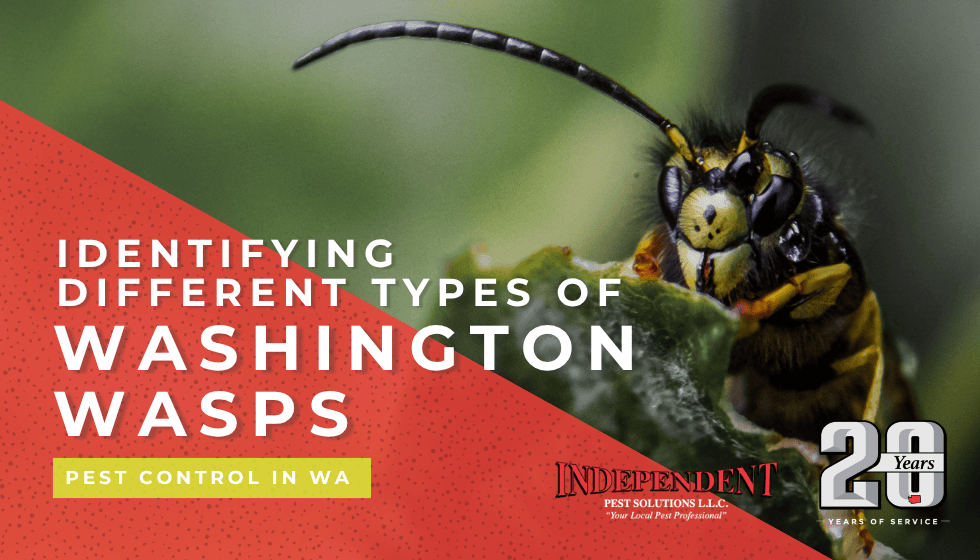
Paper wasps, bald-faced hornets, and yellowjackets are often confused for each other, but actually have distinguishing features and behaviors. Some stinging insects are more dangerous than others, which means that it’s important to be careful. Some types of insects can sting multiple times and cause allergic reactions. It may be a good idea to have a pest control technician come and handle your wasp problem.
In summer, there’s increased insect activity. In Washington, this may mean that you’ll see more hornets and wasps in the area, foraging for food and supplies. Knowing what type of stinging insect you’re dealing with can help you figure out what to do next. Independent Pest Solutions has years of experience with local pests and can identify and get rid of the stinging insects on your property, whether they are paper wasps, yellow jackets, or bald-faced hornets.
Paper Wasps
Paper wasps are often mistaken for yellow jackets, but they are actually a different species. They are thinner and longer than yellow jackets, and have long legs that dangle down. They have bright yellow markings and brownish red wings.
Paper wasps make open nests that look like umbrellas. The queen will start to make the nest in springtime. The nests are made of chewed-up wood put in hexagonal shapes, and they can become up to six inches wide. This is where the paper wasps raise their young. They like to build them in the eaves of houses, under tree branches, on metal surfaces, under railings, etcetera.
The colony grows throughout the spring and summer, containing up to 75 individuals. All of the paper wasps die out in the late summer and autumn, with only the queen staying alive and overwintering. Sometimes, near the end of their lifespan, paper wasps will act confused and reckless, becoming more aggressive.
Paper wasps are generally harmless and less aggressive than other types of local hornets and wasps. They can still sting if they feel threatened, which is painful. Paper wasps can actually be beneficial in some ways, such as eating agricultural pests.
Yellow Jackets
Yellow jackets look similar to paper wasps, with striking black and yellow stripes. Yellow jackets have fatter bodies and more yellow surface area on their bodies. They have wings, antennae, and six legs.
Yellowjacket nests are much larger than paper wasp nests, with multiple layers and an outer shell. The nests have a nickel-sized opening that the workers enter and exit through. Yellowjacket nests can be found inside walls, trees, bushes, or the ground. Their nests are made of saliva and chewed wood, and can grow to be the size of a basketball.
Colonies of yellow jackets can have between 1000 and 5000 workers. The queen emerges from hibernation in the spring and begins to raise young. The colony grows throughout the summer, and then dies off in late summer and autumn. The queen mates, and then overwinters in a safe place such as an attic, log, or wall void.
Yellowjackets are considered the most dangerous stinging insects in America. They can sting multiple times, and the stings cause sharp pain. Yellowjackets are very aggressive, especially when the end of summer comes. They can detect nearby vibrations, which triggers them to defend their nest. If a yellowjacket gets crushed, they release a chemical signal that can drive the colony to attack.
Bald-faced Hornets
Bald-faced hornets are the only true species of hornet in Washington. They are large and mostly black, with light markings on their faces and bodies. They have dark brown wings.
Bald-faced hornet nests are large and tapered at the bottom. Like other types of local stinging insects, their nests are made of chewed-up wood pulp. The nests have a thick papery exterior layer, and inside are levels of hexagonal comb. There is an entry hole at the bottom of the nest. Bald-faced hornet nests can be found in trees, bushes, or sometimes on human buildings.
Bald-faced hornet colonies start with just the queen in spring, and can grow up to 400 hornets. As with related species, the colony dies off in the fall except for the new queens, which hibernate through the winter.
Because they can sting multiple times, bald-faced hornets can be dangerous to people and pets. They can also spray venom from their stingers that can painfully temporarily blind humans and animals. Bald-faced hornets are easily provoked and can attack in large numbers.
When to Hire Pest Control Professionals
It may be tempting to try and deal with a wasp or hornet nest on your own, but that could mean putting yourself in danger. Some signs that you should call Independent Pest Solutions to handle the issue include:
- You have allergies to insect stings.
- The nest is in a hard-to-reach place or inside your home.
- There are a large number of insects in the colony.
- The pests are an aggressive, dangerous species such as yellowjackets or bald-faced hornets.
If you think that there is a yellowjacket, wasp, or hornet infestation on your property, then schedule an inspection with Independent Pest Solutions. We will use our expertise to identify what type of pest is on your property so that we can best tackle the issue. Different types of wasps and hornets require different pest control methods, so it’s smart to leave it to the professionals. Our experts will safely get rid of the nest for you and your family.
Contact Independent Pest Solutions Now!
Frequently Asked Questions
1. What are some other Washington pests easily confused for hornets?
Mud daubers, honey bees, and bumblebees are some other insects that can be confused for hornets. However, although these bugs can sting, they aren’t nearly as aggressive or dangerous as yellow jackets and bald-faced hornets.
2. What should I do if I'm stung by a stinging insect?
The first thing you should do is remove the stinger, then wash the area well and apply ice to help reduce swelling. If you notice signs of a severe allergic reaction, go to the emergency room or use an EpiPen right away.
3. What are some signs of an allergic reaction from a sting?
Redness, swelling, and pain are signs that you are having an allergic reaction to an insect sting. More serious reactions can cause the throat to close up, shortness of breath, and dizziness, which are signs of a life-threatening condition called anaphylaxis.
4. Can’t I just use bug spray from the store to kill the hornets?
It can be dangerous to remove a hornet or wasp nest on your own, because wasps are so aggressive when they feel threatened. It’s best to hire professionals to handle the problem.
5. What season are yellowjackets the most active?
Yellowjackets and similar flying, stinging insects are most active in summertime. Peak activity is in late summer, and then they dwindle as the colony dies off in the fall and winter.