
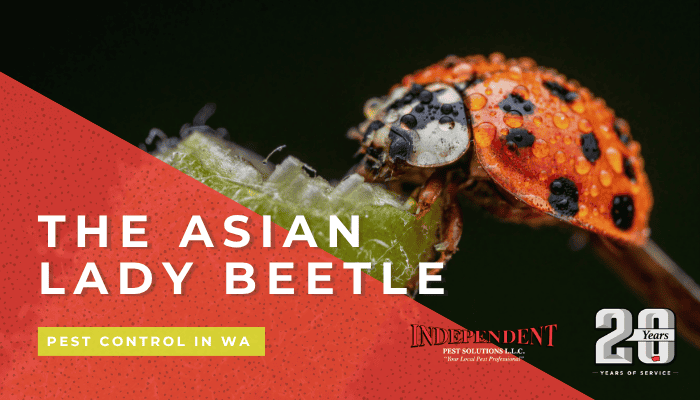
Asian lady beetles are beneficial predators outdoors, but they can become frustrating household pests when large numbers enter homes for the winter. They resemble several native lady beetle species, although their variable coloring and distinctive marking behind the head can help homeowners identify them.
Correct identification can help you decide how to handle the problem. Independent Pest Solutions can identify the insects entering your home and recommend an appropriate treatment and prevention plan. We are experienced Puyallup pest control professionals serving homeowners throughout the surrounding area.
How Did Asian Lady Beetles Reach Washington?
USDA researchers intentionally released Asian lady beetles in parts of the United States during the late 1970s and early 1980s as biological control agents. The beetles feed on aphids, pear psylla and other soft-bodied insects that damage crops.
Releases occurred near Washington’s Chelan, Klickitat and Yakima counties. However, Washington State University reported that those populations did not establish in eastern Washington. Some later populations may have spread from releases elsewhere or arrived unintentionally aboard cargo ships.
Asian lady beetles are now found across much of the United States, including Western Washington.
How to Identify an Asian Lady Beetle
Adult Asian lady beetles are generally about one-quarter to one-third of an inch long and have rounded, arched backs. Their coloring can vary considerably.
They may be:
- Yellow, orange, tan, red or occasionally black
- Marked with anywhere from no spots to 19 black spots
- Slightly larger and more oval than some native lady beetle species
One of their most recognizable features is a dark M- or W-shaped marking on the pale area directly behind the head. This area is called the pronotum. The marking can be thick, thin, broken or difficult to see, so color and spots alone are not always enough for positive identification.
Like other beetles, Asian lady beetles develop through four stages: egg, larva, pupa and adult.
When threatened or crushed, the beetles can release yellow, strong-smelling hemolymph from their leg joints. This defensive process is sometimes called reflex bleeding. The fluid may leave stains on walls, fabrics and other light-colored surfaces.
Why Asian Lady Beetles Enter Homes
Asian lady beetles are valuable predators during the spring and summer because they consume aphids and other plant pests. You can learn more about these insects in our guide to dealing with aphids in your home and yard.
The beetles become household pests as temperatures begin to fall. In their native habitat, they spend the winter in protected spaces such as cracks in cliffs and rock formations. In Washington, homes can provide similar shelter.
Asian lady beetles commonly enter through gaps around windows, doors, siding, fascia boards, utility lines, soffits and vents. Once inside, they may gather in:
- Wall voids
- Attics
- Garages
- Enclosed porches
- Window and door frames
- Other protected cavities
They are especially attracted to sunny, exposed sides of buildings and contrasting light and dark surfaces. South- and west-facing walls often receive the most activity.
Asian lady beetles frequently spend the winter in large groups. Warm, sunny days can awaken them, causing beetles to emerge from walls and appear near windows or light fixtures.

Are Asian Lady Beetles Harmful?
Asian lady beetles do not reproduce inside homes, eat stored food or cause structural damage. The beetles that appear indoors during winter or spring generally entered the building during the previous fall.
However, they can still create several problems:
- Large groups can become a significant nuisance.
- Their defensive fluid can create an unpleasant odor.
- The yellowish secretion may stain walls, curtains and fabrics.
- They can occasionally bite or pinch exposed skin.
- Dead beetles and their particles may cause allergic reactions in sensitive individuals.
Their bites are generally minor, and the beetles do not sting or transmit disease. Anyone experiencing a concerning allergic reaction should seek appropriate medical advice.
Asian lady beetles may also compete with native lady beetle species for aphids and other food. However, the broader ecological effects vary by location and should not be overstated without supporting evidence.
How to Prevent Asian Lady Beetles
Preventing entry is the most effective way to manage Asian lady beetles. Exterior gaps should ideally be repaired during spring or summer, before beetles begin looking for winter shelter.
Inspect and seal openings around:
- Window and door frames
- Fascia boards and soffits
- Siding and foundations
- Utility pipes and wiring
- Attic, roof and dryer vents
- Garage doors
- Exterior thresholds
Repair damaged screens and install properly fitted door sweeps where needed. Asian lady beetles can fit through openings approximately one-eighth of an inch wide, so even small gaps can matter.
For help identifying an infestation or addressing pest entry points, review our complete pest control services.
Conclusion
Asian lady beetles are helpful predators outdoors, but large numbers inside your walls, attic or living spaces can become difficult to manage. The best long-term approach is usually to identify likely entry points and take preventive action before the beetles begin gathering on buildings in the fall.
Independent Pest Solutions can inspect your property, identify the insects involved and develop a practical pest-control plan. Contact Independent Pest Solutions for local, professional assistance.
Contact Independent Pest Solutions Now!
Frequently Asked Questions
How can I prevent Asian lady beetles from entering my home?
How can I remove Asian lady beetles without crushing them?
I would remove the suggestion to pick them up individually. Handling them increases the chance of bites, odor and staining.