
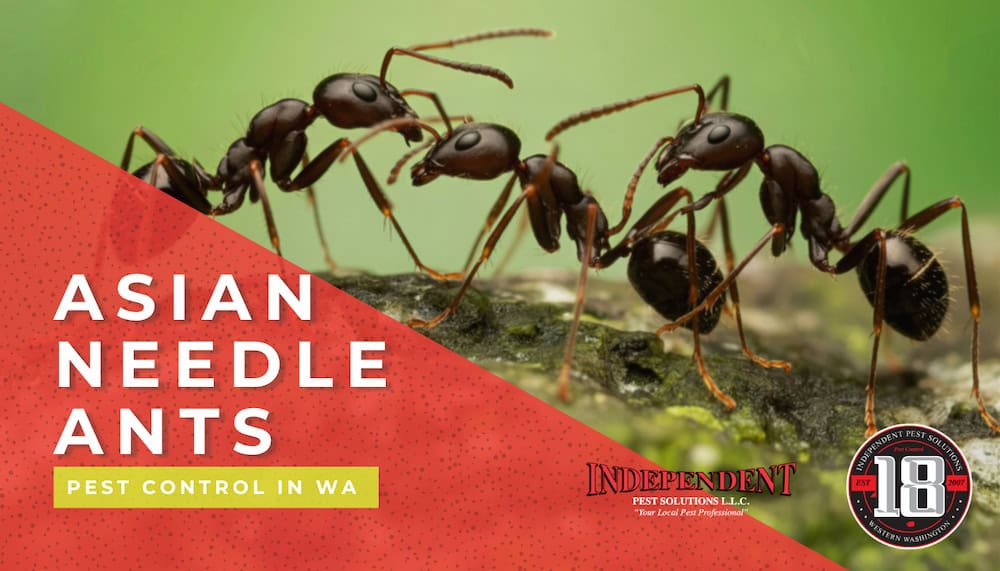
Asian needle ants are an invasive ant species recently found in Washington. They like to nest in shady areas underneath debris. Asian needle ants can pose environmental concerns and have a painful bite that can cause allergic reactions. A pest control technician can safely get rid of Asian needle ants on your property.
Asian needle ants are a type of ant species native to East Asia. Unfortunately, they have become invasive in the United States of America and have recently been sighted in Washington. Today, we’re going to go over how to identify Asian needle ants, their behaviors, and the dangers they can pose. Independent Pest Solutions is here to help with any pest problem you may have, no matter how tough.
What do Asian needle ants look like?
Asian needle ants (scientific name: Brachyponera chinensis) look similar to native species such as odorous house ants. They have dark brown or black, shiny, smooth bodies. Asian needle ants lack the spines found on other local species. One distinguishing feature is that their legs and mandibles are lighter in color, being an orangish-brown. Their mandibles are long and sharp, and they use them for both foraging and self-defense.
The ants are around 0.2 inches long (5-6.5 millimeters), and have slender bodies. Individuals are usually found on their own rather than marching in lines.
Asian Needle Ant Life Cycle
Like other ant species, Asian needle ants have four life cycle stages. The first is the egg stage. The queen lays eggs that later hatch into larvae, which are cared for by the colony. The larvae go through multiple molts before they become pupae. After the pupal stage, the ants become adults. There are different types of adult ants, including queens, males, and workers. They all have different roles to fill, such as reproduction, finding food, and caring for the young and the nest.

Where do Asian needle ants like to nest?
One reason Asian needle ants are so invasive is that they can adapt to and thrive in many different environments.
Dangers that Asian Needle Ants Pose
Hurts Native Species and the Environment
Invasive pests can disrupt the balance of the local environment. Native ants help disperse seeds throughout the Pacific Northwest’s forests and gardens. However, Asian needle ants dominate their territories and push out other ant species. They may also prey upon native ant species. As a result, seeds cannot be distributed. Over time, this can have a large negative impact on forest undergrowth. (And with the number of wildfires happening lately, this can be catastrophic.)
-
Dangerous Stings
Asian needle ants can deliver a painful bite (similar to a sting) when they feel threatened. These ants are hard to avoid because they’re difficult to spot. Not only are these stings incredibly painful, but they can also cause allergic reactions such as hives and anaphylaxis. Some minor symptoms include swelling, itching, and redness, but anaphylaxis can cause a person to be hospitalized or even kill them. For most people, the pain lasts a few hours, while the itchiness lasts longer.If you or a family member is bitten by what is suspected to be an Asian needle ant and you start experiencing symptoms, seek immediate medical attention. People with allergies to other insects, such as bees and wasps, are at higher risk of anaphylaxis, although the reaction can occur even if the person doesn’t have any known allergies.
-
Asian Needle Ant Control
Remove potential nesting materials, such as fallen leaves, mulch, rotting wood, and other debris, so your yard doesn’t appeal to Asian needle ants. While cleaning up an area where Asian needle ants are suspected, make sure to wear gloves for protection.To keep them out of your home, find entry points they could be using and seal them. Make sure food is stored securely so that ants can’t access it. Clean up spills and crumbs to eliminate food sources for pests. Ensure that you don’t have leaky faucets or pipes in your home. Take steps to reduce indoor moisture, such as using dehumidifiers.