
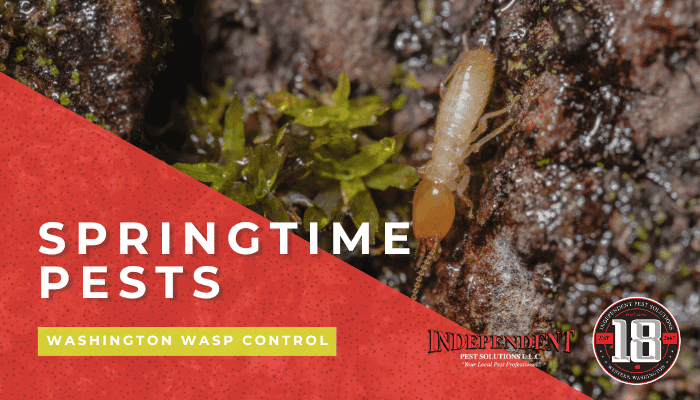
As temperatures warm up in Washington for spring, many types of pests become more active. One of these pests is termites. There are multiple types of termites in Washington, and they may swarm during the springtime. If you see a swarm or other signs of termite activity on your property, it’s important to get the problem addressed as soon as possible. Independent Pest Solutions can eliminate termites and keep them from returning.
WA Termite Exterminator
Termites
Termites are social insects, forming colonies with thousands of members. These colonies have workers, reproductive members (including the queen), and soldiers. In nature, termites have an important role as decomposers, breaking down decaying wood. This helps return nutrients to the environment. However, when termites start targeting human buildings, they quickly become a nuisance.
Swarming
Swarmers are flying termites that you see during springtime. Their scientific name is alates, and they are reproductive termites that have wings. Alates live near the surface of the termite nest until conditions are right. They usually appear after a warm rain, when they venture out to find a new place to establish a colony. Damp soil makes it easier to start building a nest, and most termites need humidity to survive. Swarms can have hundreds to thousands of termites, with both female and male individuals.
The purpose of the swarms is for the termites to pair off, mate, and attempt to start new colonies. After mating, the swarmers shed their wings. If you actually see swarmers, it means that a local termite colony has reached capacity and needs to branch out. Unfortunately, this could mean that there is a large termite population on your property.
When ants go into a human home, they try to squeeze themselves into cracks and crevices. Termites may also enter your home through gaps in the foundation or through plumbing fixtures. If you don’t get them out of your home, they could build a new colony there. They may be attracted to your home because of light fixtures or damaged wood.
Subterranean Termites
The type of termites that often swarm during the spring, rather than the summer, is subterranean termites. They are relatively small, but have massive colonies. The winged alates are up to 0.4 inches long, including their wings, while worker termites can be up to 0.2 inches long. Alates of this species are dark brown or black. Subterranean workers are cream-colored, with long, rice-shaped bodies.
Subterranean termites got their name because they live underground. Living in the soil allows them to have a constant source of moisture. They build tunnel systems out of mud tubes so that they can travel between their nesting sites and food sources. Spotting mud tubes near your home is a sure sign that you have a termite infestation. Mud tubes are able to keep the termites safe and trap in moisture.
The main source of food for subterranean termites is wood cellulose, and they are not picky. They target wood structures in homes, such as support beams and flooring. Unlike other types of termites, they are able to eat sound, dry wood. They are able to travel large distances to find wood to use as a food source. However, subterranean termites do have to return to their nests to get water and bring food to the colony
Signs of Termite Infestation
- As we mentioned before, termite swarms mean that there is a large colony nearby. Make sure not to ignore the problem, and call a pest control company.
- Signs of termite activity, such as discarded wings, mud tubes, hollow-sounding wood, sawdust-like droppings, blistering paint, staining, hearing noises inside the walls, and more.
- Structural damage to the home. Termites can cause extensive damage before you even realize that they’re there. They cause billions of dollars in structural damage every year.

Although termites are small, they can be a huge problem. If you suspect that you have termites on your property, have Independent Pest Solutions come to assess the situation. It’s vital that you have a professional handle your termite problem so that it doesn’t get any worse. Termite pest control can be tricky and involves strategic treatment.
Schedule a pest inspection with one of our technicians today!
Contact Independent Pest Solutions Now!
Frequently Asked Questions
How long do aphids live?
Aphids live for about a month or less, but during that time frame, they produce many offspring.
Why are aphids a problem?
They feed on and destroy plants, destroying gardens and agricultural crops alike. Aside from damaging and killing plants outright, aphids can also spread plant diseases.
How can I prevent aphid infestations?
Be proactive about your garden and watch out for aphids so that you can quickly address the problem. Before introducing new plants to your garden, inspect them for aphids.
Are aphids dangerous?
Aphids are only dangerous to plants. They do not bite or sting humans, or spread diseases to us.
What causes aphid populations to grow quickly?
When it rains, or the weather gets warmer, it can cause new growth flushes of aphids. That’s why it’s important to start pest control management at the beginning of spring, before the problem gets out of control.